
For children born with only one functioning heart ventricle, the Fontan procedure offers an effective yet imperfect solution for improving blood circulation. While some who receive the surgery go on without complications, nearly 20% of patients experience Fontan failure, leading to additional surgeries or death within 20 years, according to the American Heart Association.
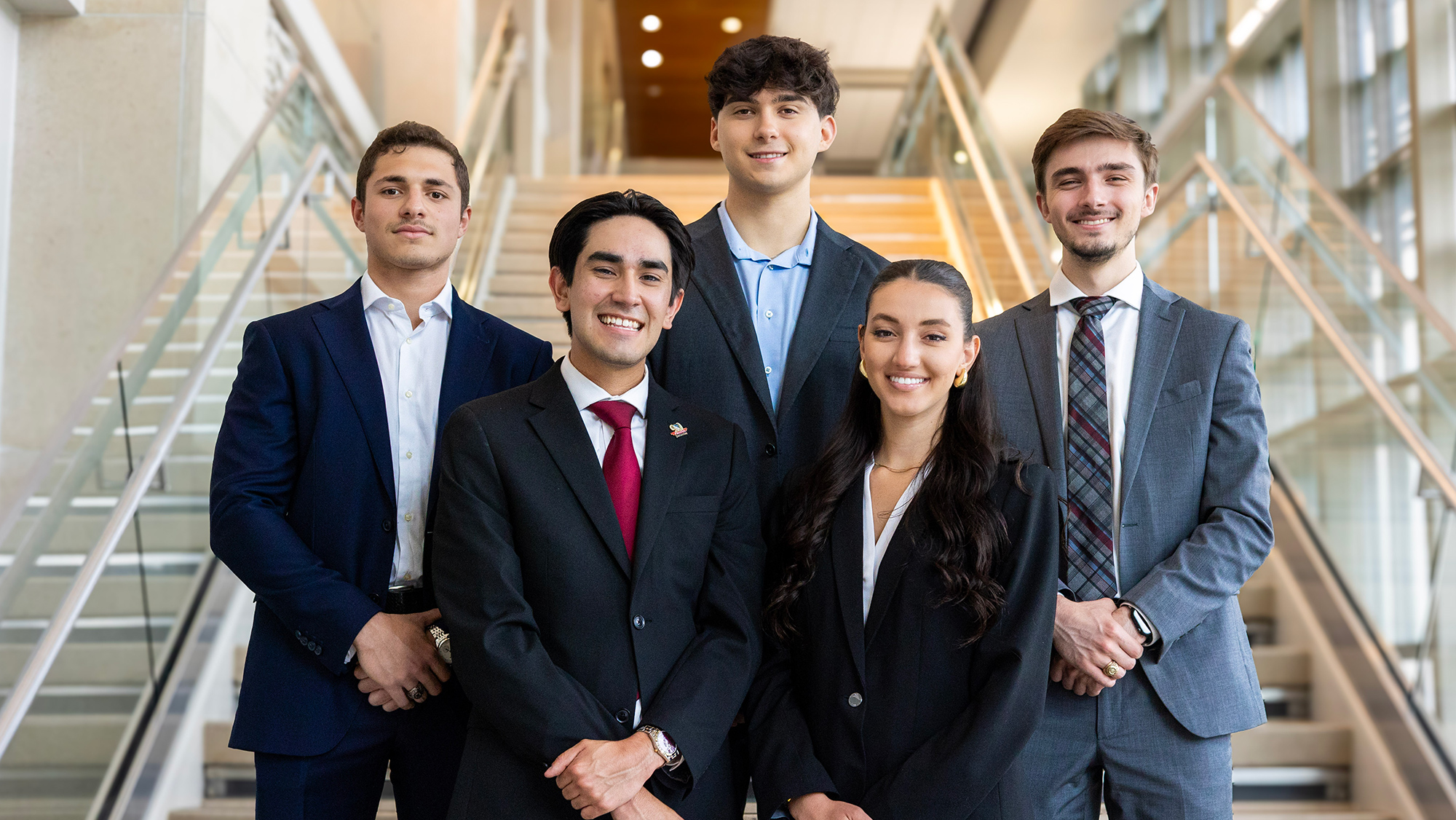
Recognizing the limitations of the Fontan procedure, a student capstone team in the Department of Biomedical Engineering at Texas A&M University developed a device to support circulation in patients who have undergone the surgery.
The Fontan procedure creates a new pathway for blood to pump to the lungs, allowing the single working ventricle to pump oxygenated blood to the body. Over time, however, that ventricle may weaken, leading to Fontan failure when it can no longer sustain adequate circulation. To help address this issue, the capstone team’s device would assist the working ventricle in circulating blood to the body.
“Our device is meant to allow increased cardiac output to the rest of the body and improve the oxygen delivery to the body,” team member Mohamad El Halik said.
The team is sponsored by the Southwest-Midwest National Pediatric Device Innovation Consortium (SWPDC) and is advised by researchers and physicians from the Baylor College of Medicine and the Texas Heart Institute. Their device is novel in the fact that it is not contact-driven, improving blood flow without increasing the risk of adverse effects such as blood clots.
“Our device is also unique in the way that implements a frictionless impeller, so we lower the chance of increasing shear stress and hemolysis on the blood within the device,” team member Yannik Balster said.
The team has constructed a prototype of their device, which will eventually be miniaturized for pediatric patients.
“What will be cool is, in a few years’ time, when they are able to bring this or some aspect of the device to market,” El Halik said. “It would be really cool to know that I worked on that project, and no matter how small it is, it's making an impact on people's lives.”
The project aims to improve outcomes for children with congenital heart defects and serves as a learning experience for the students involved.
“Helping pediatrics is a big mission that we should continue to pursue,” Balster said. “It was a good message and a good project that needed to be done, but also one that was going to be challenging and make me a better student, a better engineer.”