
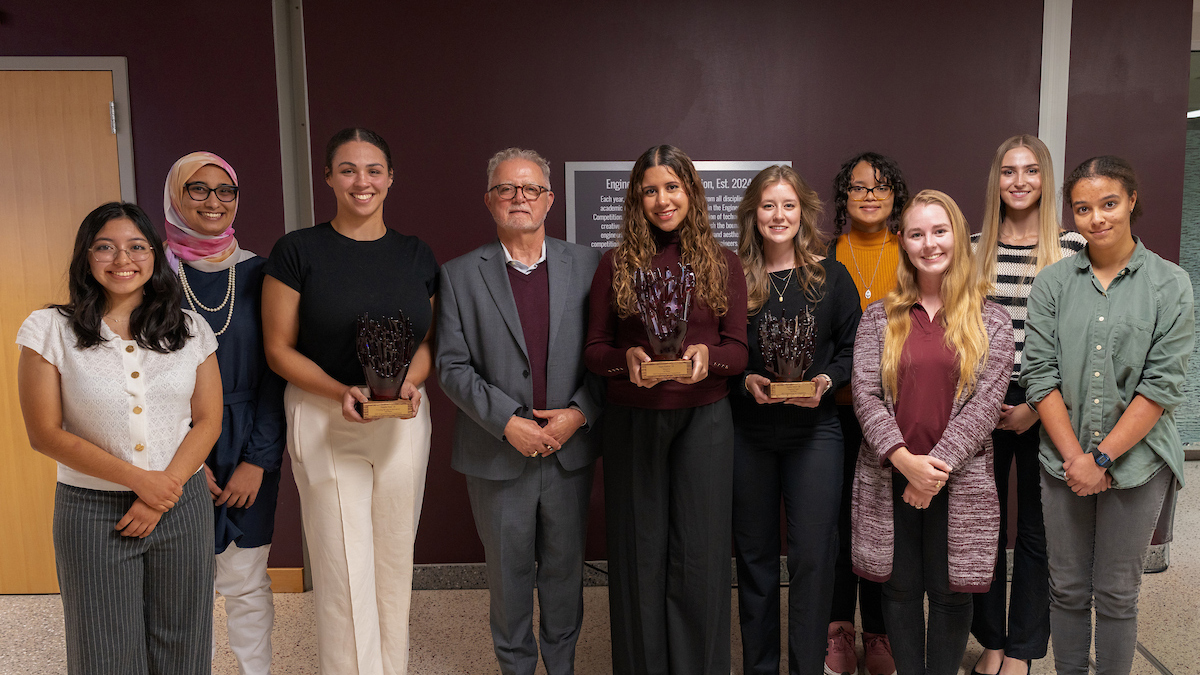
With more than 40 entries, the 2025 Engineering Art Competition embraced the theme "Engineering Elegance: The Art of Innovation." The artists represent 12 engineering departments – as well as general engineering – and brought technical thinking to life through creative, artistic expression.
Now in its second year, the competition and art exhibit was spearheaded by Dr. Robert Bishop ’79, vice chancellor and dean of the College of Engineering.
The top 10 art pieces were recognized for their creativity, hard work and relevancy to the theme. The winners, ordered first though tenth, are:
Hajra Rahim ’28
“Wired In”
Mixed Media
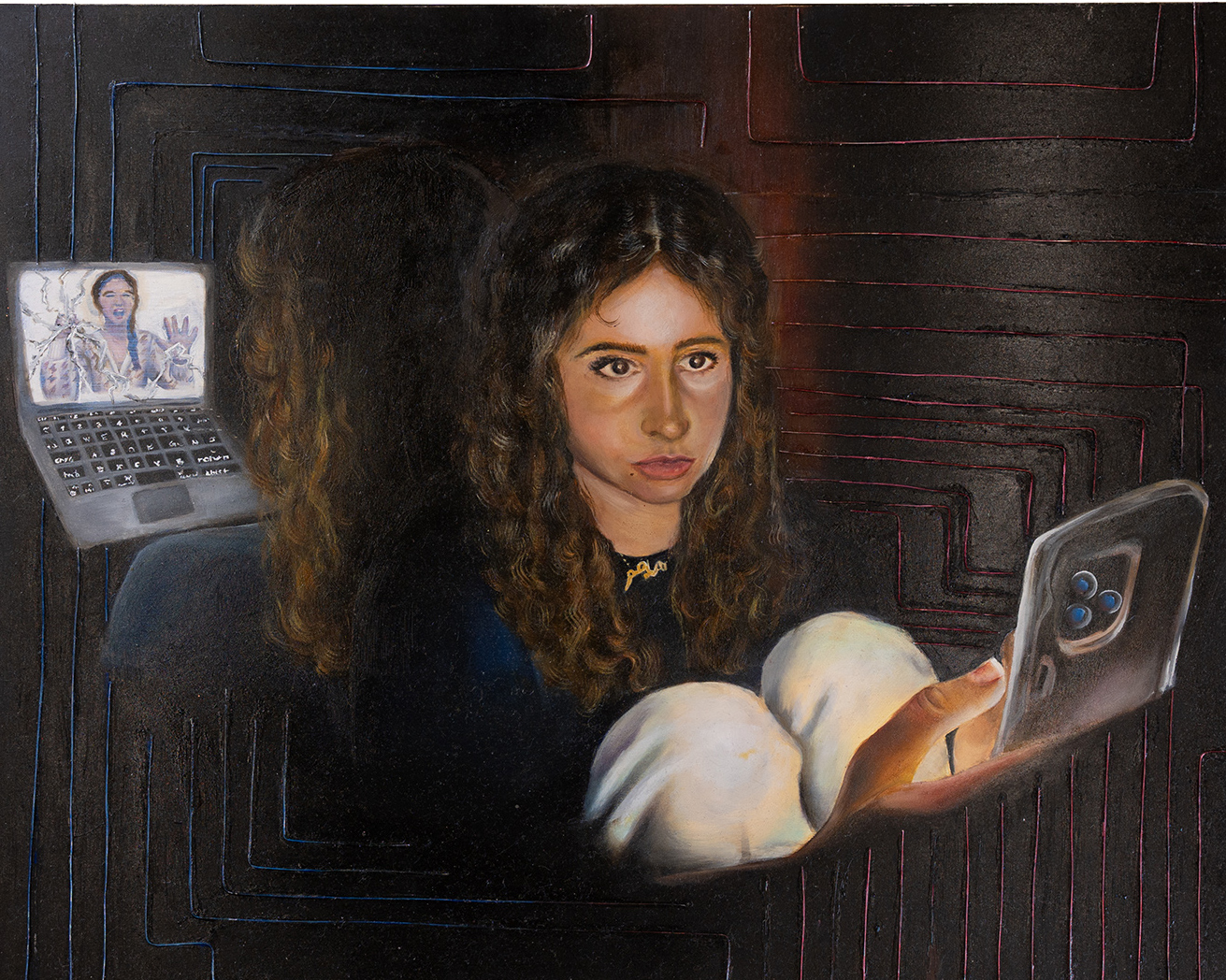
This piece examines the tension between innovation and entanglement. A combination of oil paint and metal, mixed media allows the piece to symbolize the relationships of the digital world. The glowing screens symbolize progress and the elegant engineering that connects us, while the metallic wires echo the unseen circuitry binding us in return. It’s a reflection on how technology’s brilliance can both empower and ensnare, reminding us that function must serve humanity, not consume it.
Natalie Neal ’26
“Closing the gap in innovation”
Mixed Media
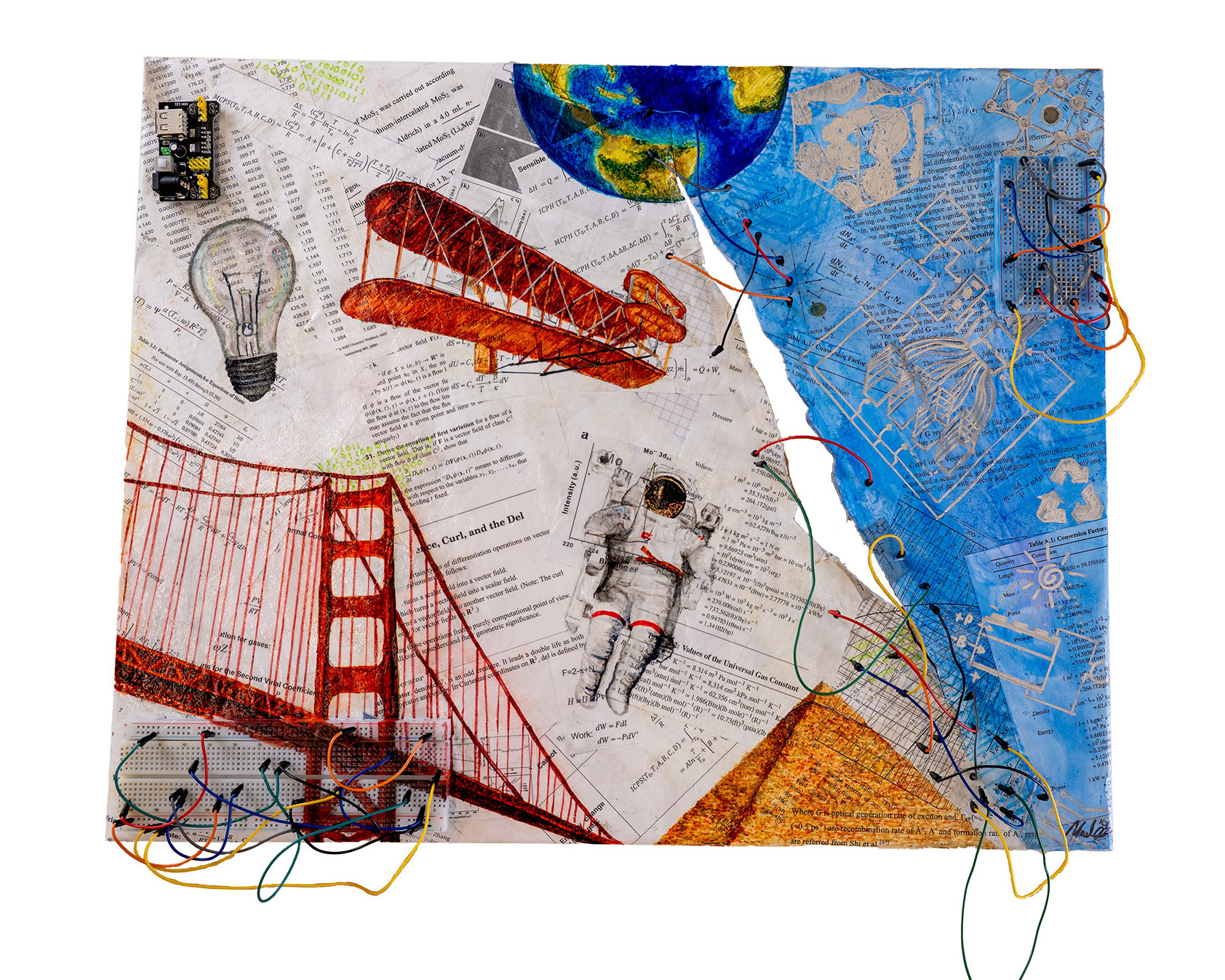
Engineering has served as a foundation for innovation. In this piece, this is demonstrated by a collage background of various printed materials found around the campus engineering buildings. On one side, some of “engineering’s greatest hits” are represented in marker and watercolor. On the other are stylized blueprints of future engineering works. The wires across the middle gap in the canvas show how we can stitch the past and future through engineering innovation.
Sophia Jones ’28
“Inspired Flight”
Colored Pencil
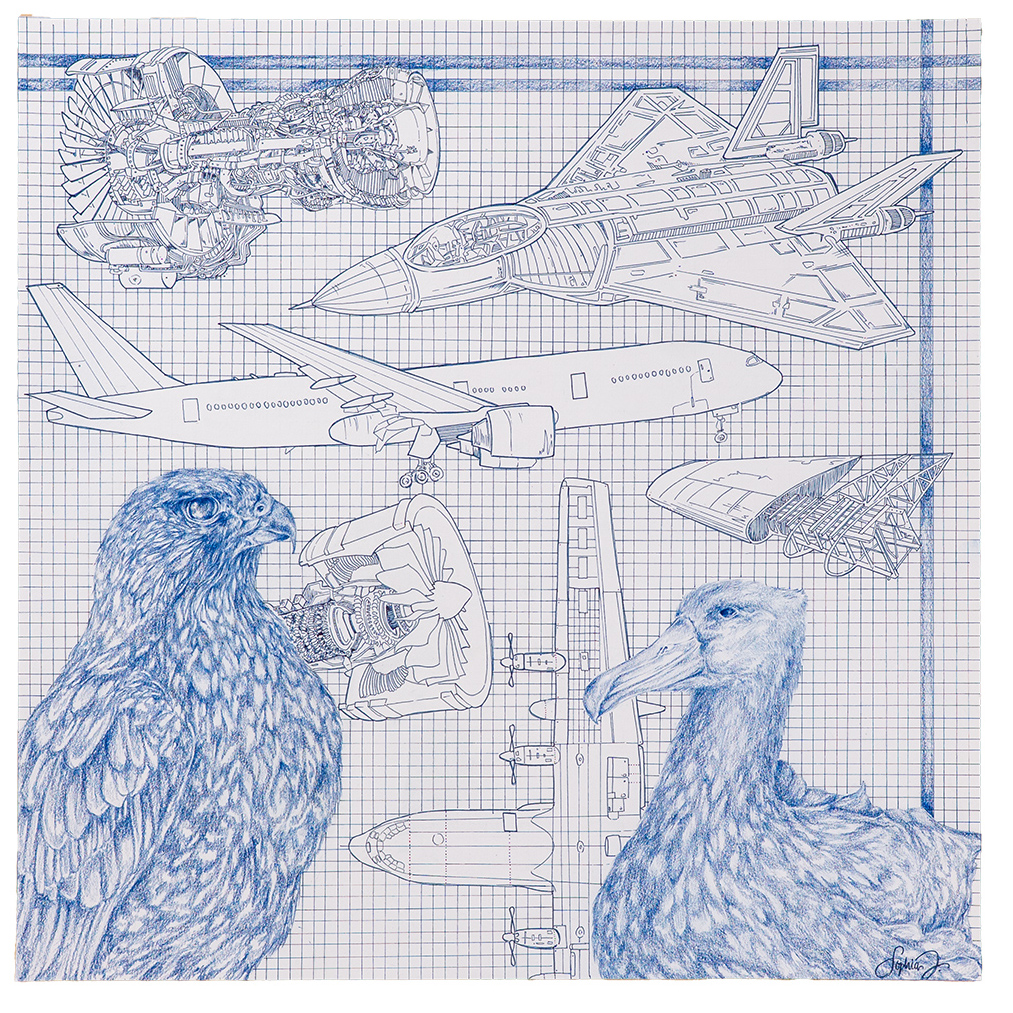
This piece explores the intricacies of mechanical designs and their interconnectedness with the natural world through the lens of biomimicry. Drawn from the peregrine falcon’s agile precision and the albatross’s effortless glide, it reflects how even the most exacting aeronautical structures find their origins in nature. This highlights how true precision in flight is not rigid but alive with rhythm and softness.
Sofia Flores ’29
“Beyond the Blueprint”
Mixed Media
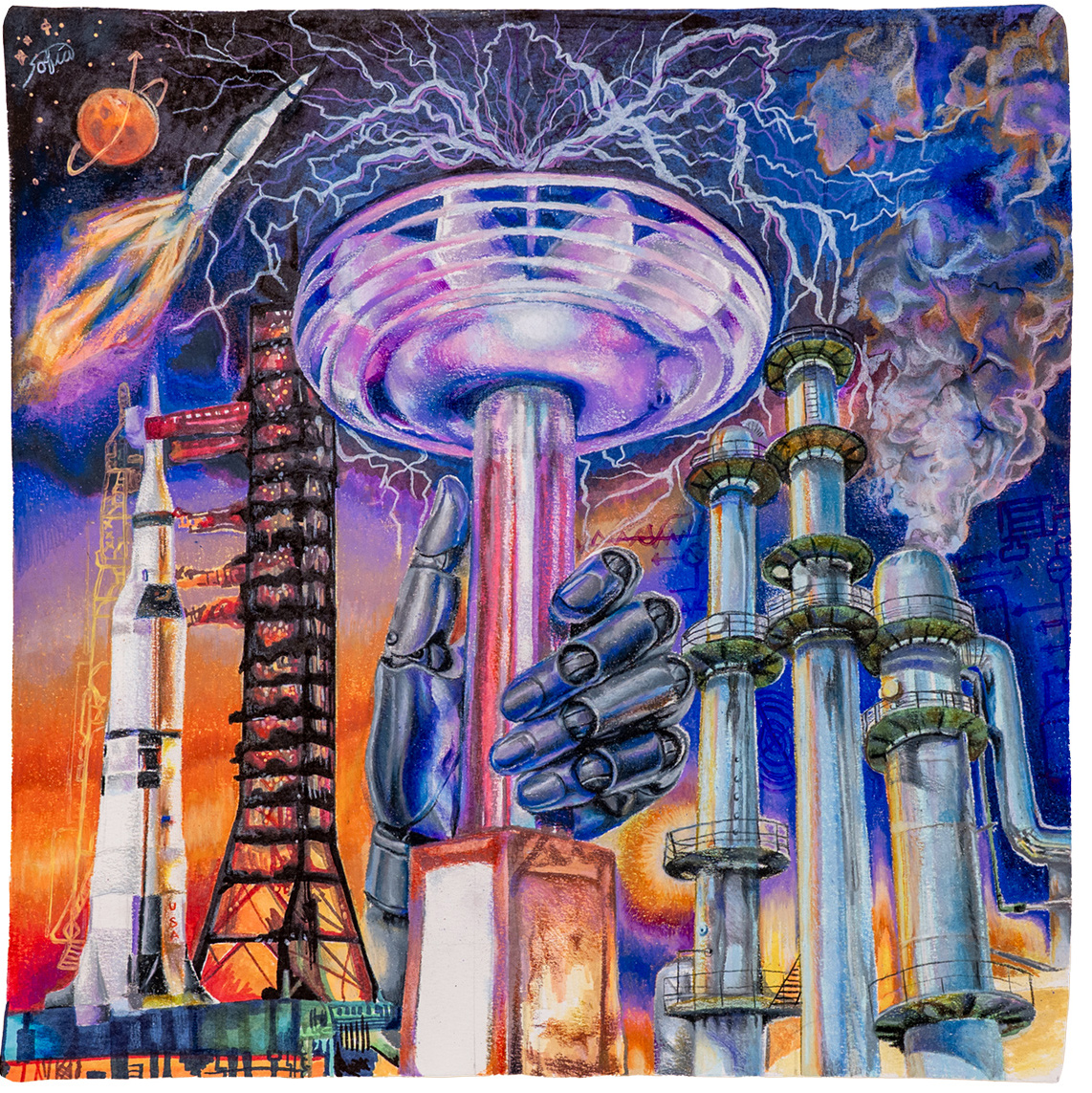
From the silent beauty of distillation towers to the charged dance of a Tesla coil, from the thunder of Saturn V to the delicate poise of a prosthetic hand, Beyond the Blueprint reveals engineering as poetry in motion. Hidden beneath the color and form, schematics painted in black-light ink whisper of unseen complexities that transform raw diagrams into the elegant machinery we celebrate, and innovation itself into art.
Lacie Horton ’26
“Datamelioration”
Acrylic Paint
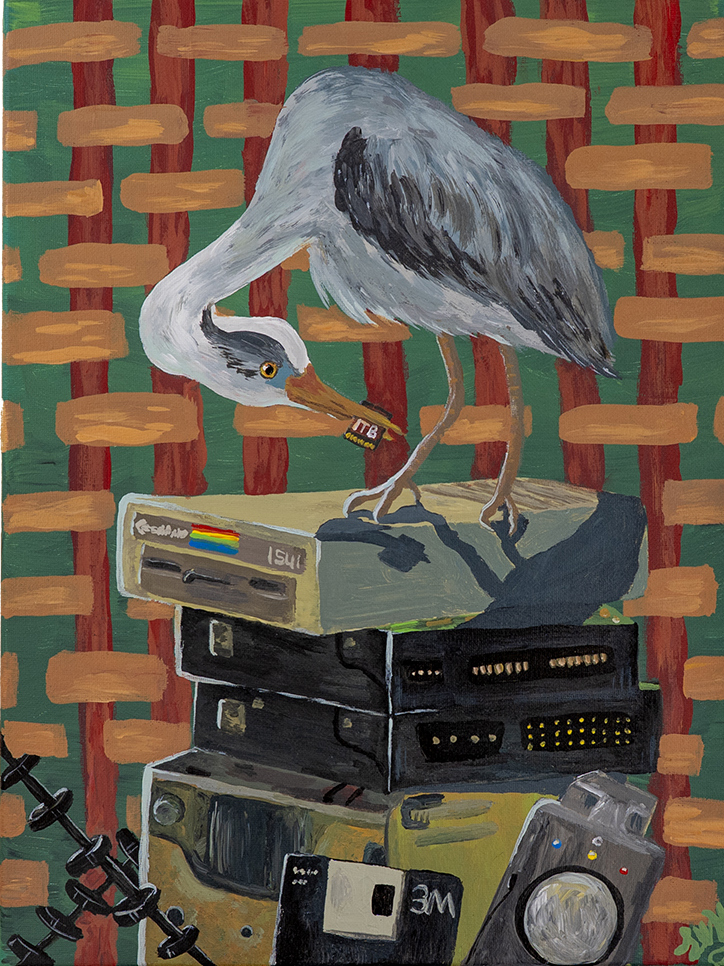
One of the most elegant aspects of modern technology is its compactness. A tiny flash drive can hold an entire lifetime of photos, yet only decades ago it would have been considered science fiction. This piece explores memory storage technologies such as the Manchester Mark I Williams-Kilburn tube, Commodore 1541 drive (and floppy disk below it), and magnetic core memory. As a modern touch, a heron (a bird known for its elegance, which has long inspired engineering endeavors) holds a 1TB SD card.
Adelynn Belle ’23
“Mach Two-can”
Acrylic Paint
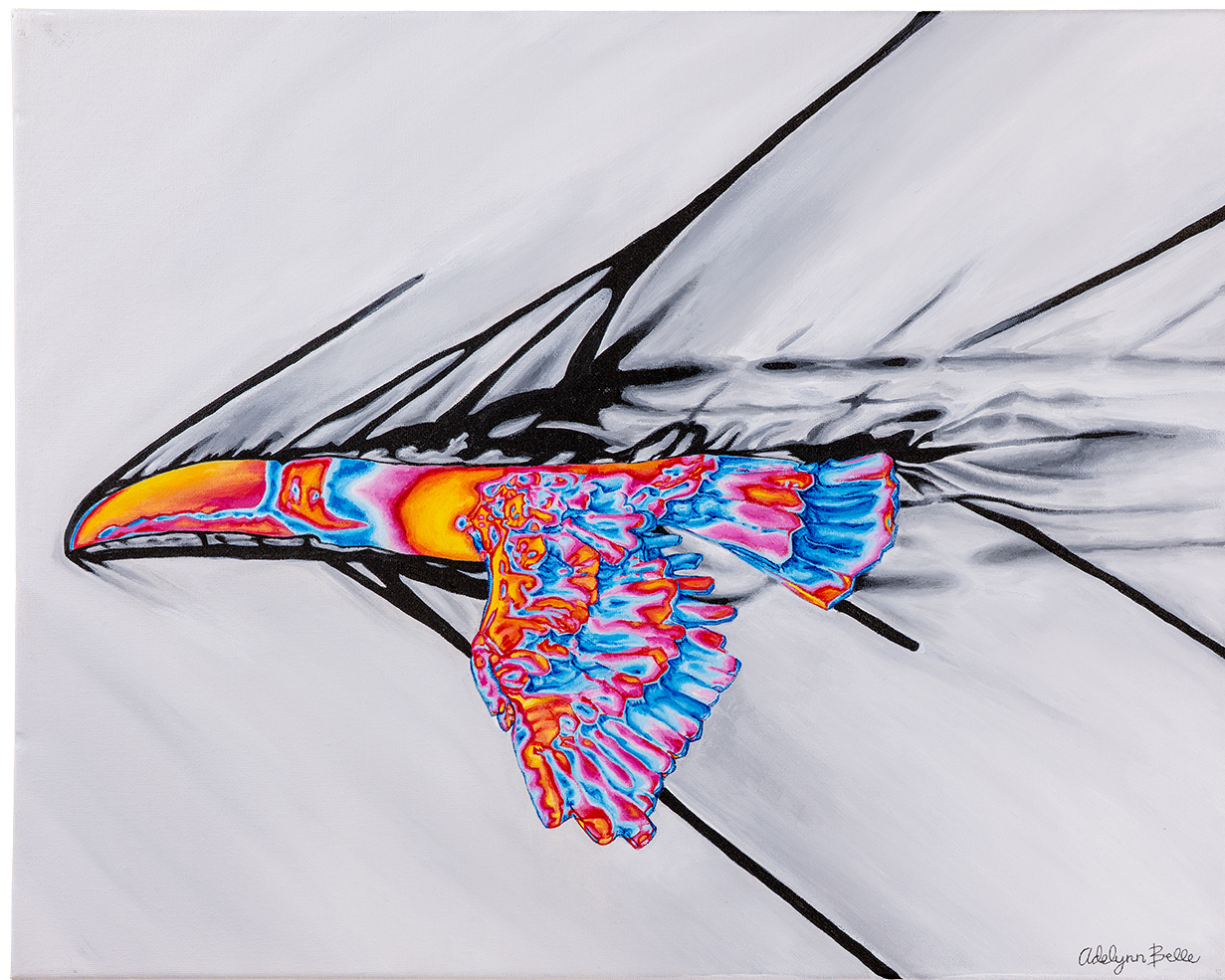
Inspired by nature, engineers are always interested in pushing the boundaries of what is and what could be. As an aerospace engineer, I was interested in the supersonic flow behavior around my favorite bird, the toucan. In collaboration with Kevin Lieb and Walker Buckle, the flowfield illustrated in this painting was solved using computational fluid dynamics. Guiding art with rigorous simulation, this piece showcases the creativity, passion and engineering analysis that innovation requires.
Fayrouz Elwassief ’30
“GROUNDED”
Mixed Media
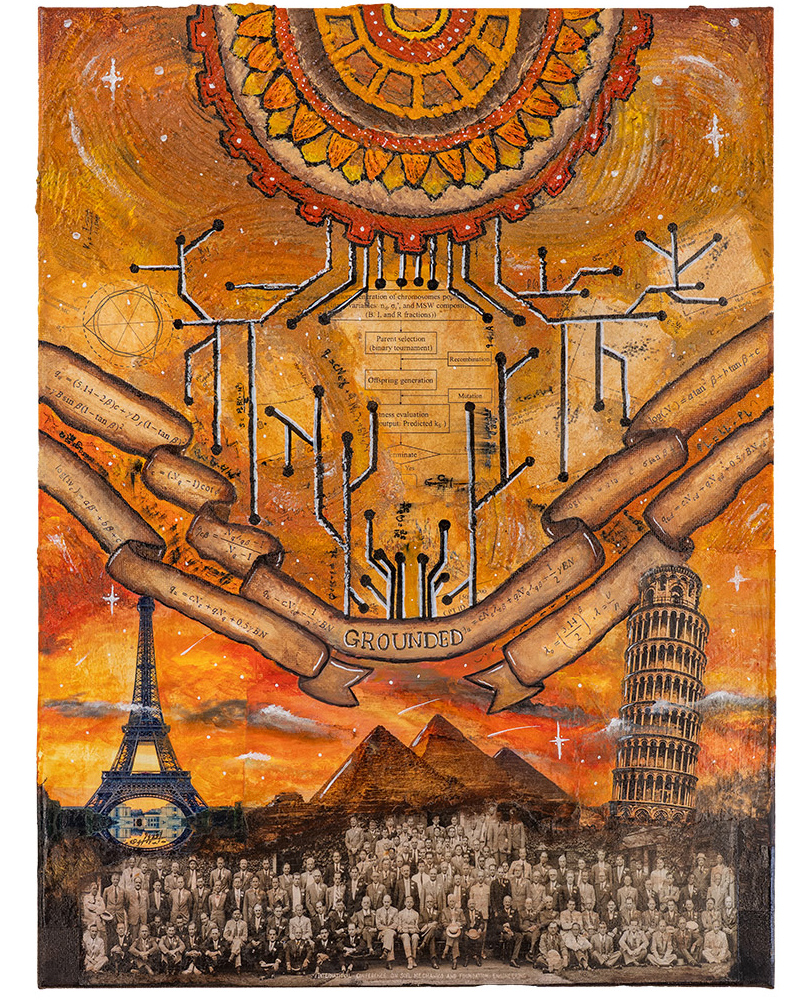
“Good judgment comes from experience, but experience comes from bad judgment.” — Dr. J.L. Briaud. With its vibrant, earthy colors, GROUNDED resembles a moment of appreciation for geotechnical science with all its failures and success stories, our geolegends who paved the ground for those who followed, and for the plethora of data gifted for us to build upon, with the magic of technology! A glimpse of my everlasting love for art, dipped in science, because they can always go together!
Sophia Wood ’29
“Rendered”
Acrylic Paint
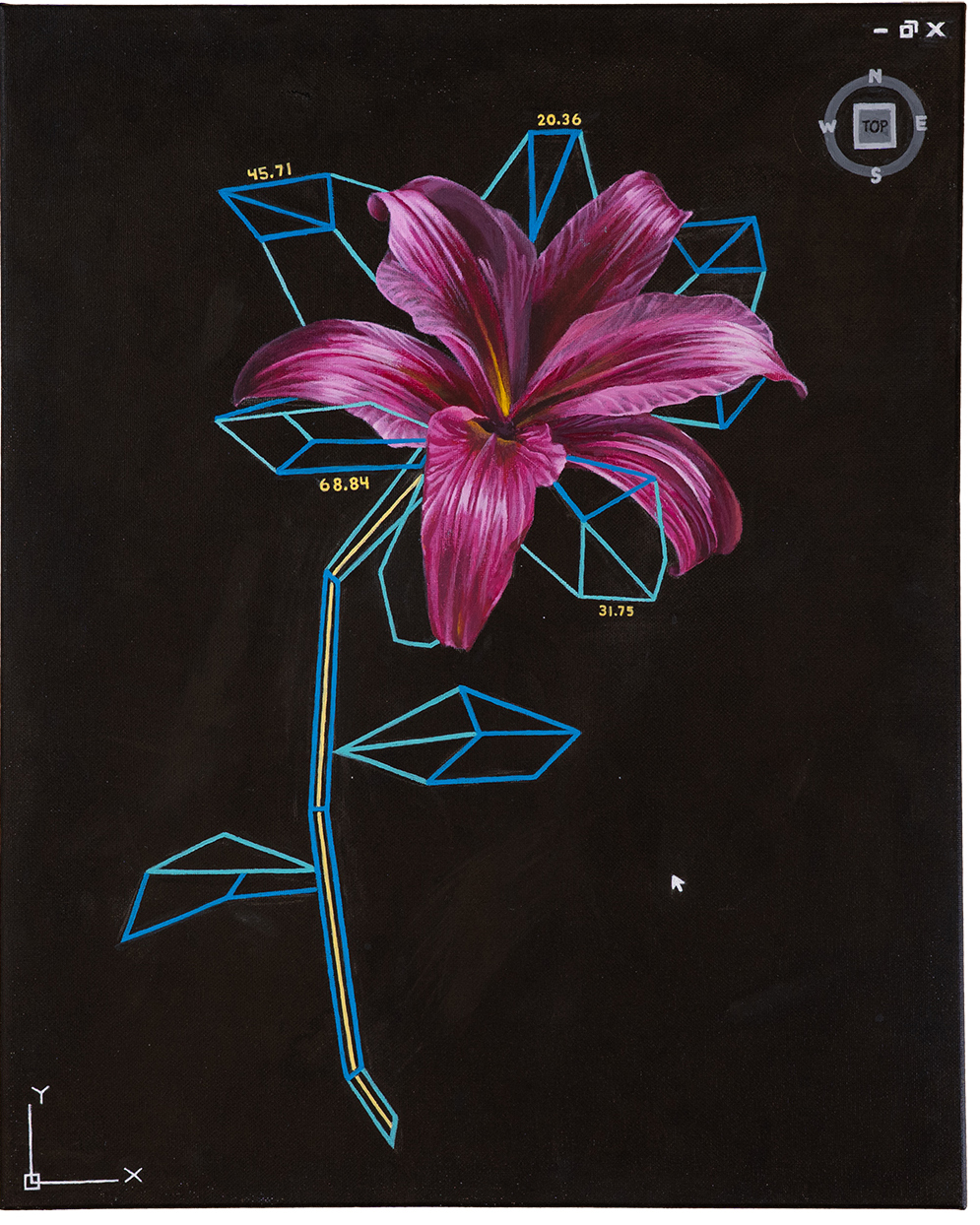
This piece explores the relationship between the intricacy of computer-aided design and natural forms, where a geometric blueprint gives rise to a real flower. Symbolic of the ways in which engineers use technology to bring their designs to life, it emphasizes the potential of digital tools in bridging theoretical concepts with physical creations. In this way, through computer-aided design, engineers have the ability to make their ideas a reality.
Isabella Chan Tack ’27
“Illumination through Engineering”
Mixed Media
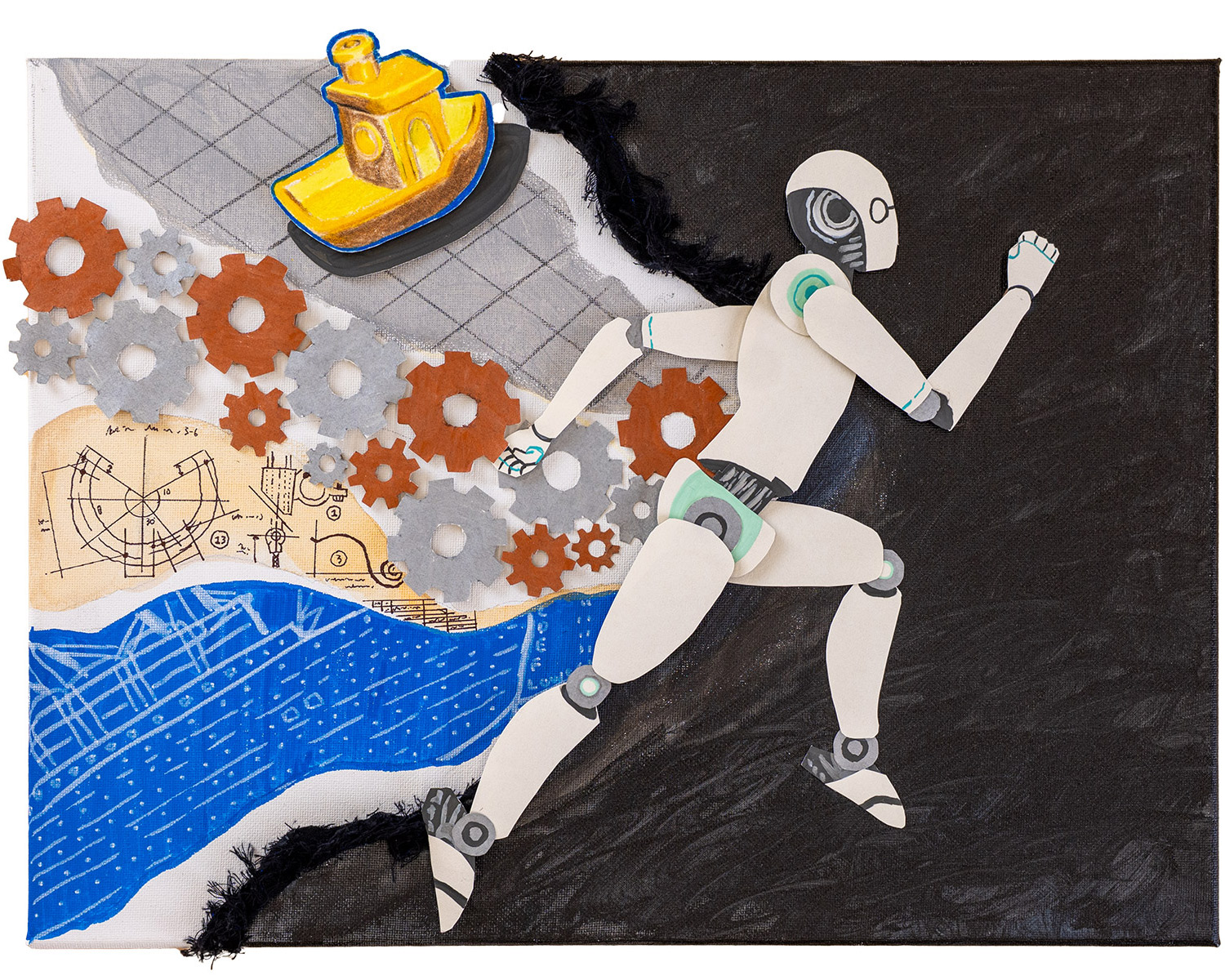
The piece features a robot fluidly running through the darkness and bringing light into its surroundings through the advancements made in engineering. Behind the robot, in the light, there are various designs featuring gears, models and engineering drafts, which are all tools that have been used throughout engineering. These tools are what led up to the creation of this robot, and they will continue to be used in the far future of engineering.
Mackenzie Edwards ’28
“Energy Within Reach”
Digital Painting
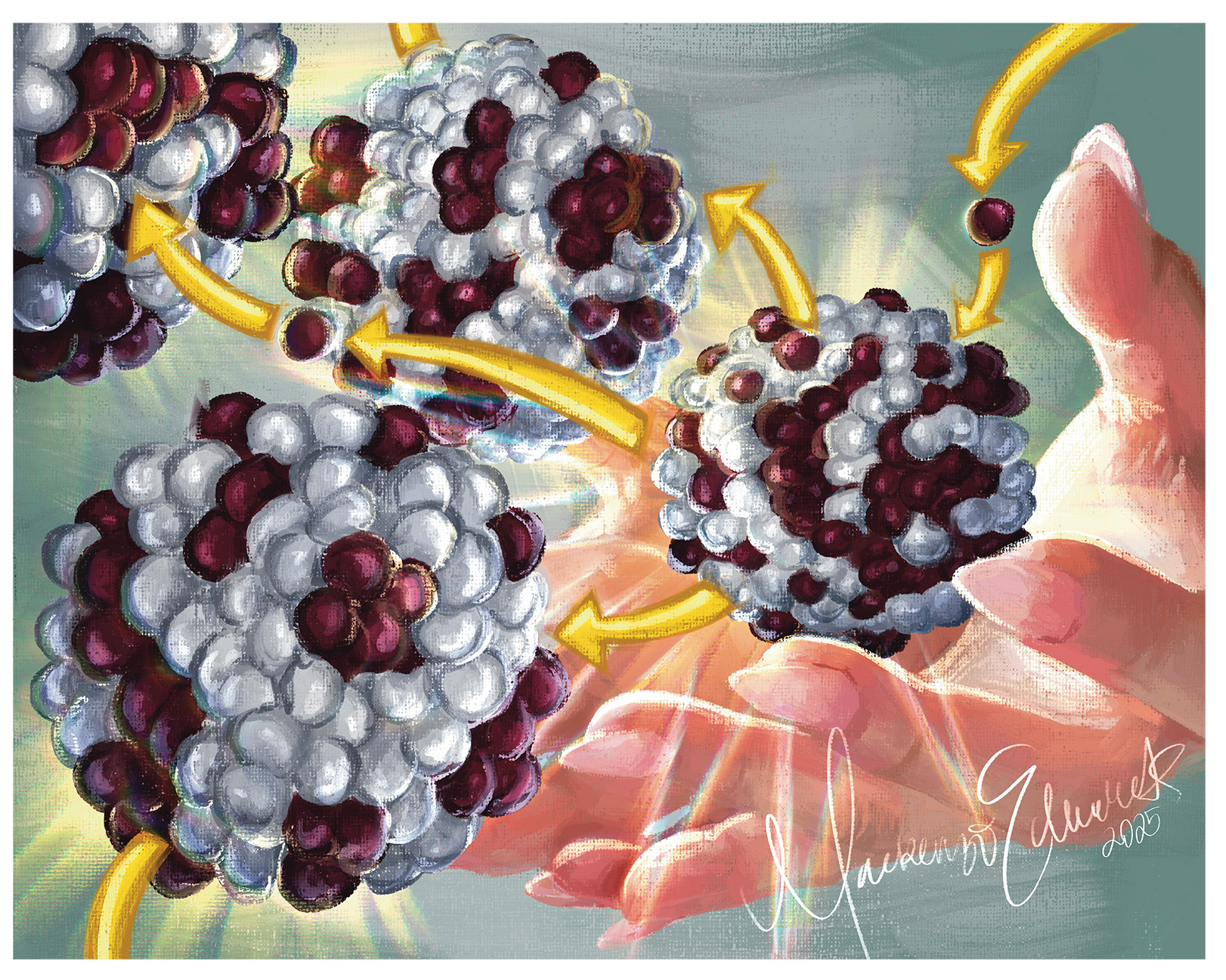
This piece captures the essence of nuclear fission in nuclear engineering, with the hands of an engineer showcasing a U-235 nucleus as a neutron approaches to begin the reaction. When the neutron strikes, the nucleus becomes unstable and splits into Kr-92 and Ba-141 nuclei, releasing energy and additional neutrons to sustain the following chain reaction. Symbolizing both power and precision, this piece represents the heart of nuclear engineering.