
For the fifth consecutive year, the Department of Biomedical Engineering at Texas A&M University hosted its annual Artistic Engineering Contest. Students, faculty and staff were invited to express the beauty they find in science and engineering through an art medium of their choice.
Faculty and staff selected five winning art pieces that will be displayed near the departmental front office in the Emerging Technologies Building.
Graduate student Rushangi Patel received first place in the competition with her piece “Biomedical Engineering: Where Innovation Meets the Human Body.”
“For my submission, I wanted to capture that connection; the blend of biology and technology, nature and innovation,” Patel said. “I started by sketching how the heart could bridge both sides: the organic, living world on one side and the mechanical, engineered world on the other. From there, I built layers of color and detail to show how both sides depend on each other, much like art and engineering do.”
Patel said art has always been a creative outlet that helps her unwind and is something she plans to continue integrating in the future.
“Art and engineering are deeply connected,” she said. “Art inspires new ways of thinking and helps visualize complex ideas, while engineering brings those ideas to life.”
Descriptions for the top five art pieces are listed below.
First place: Biomedical Engineering: Where Innovation Meets the Human Body by Rushangi Patel
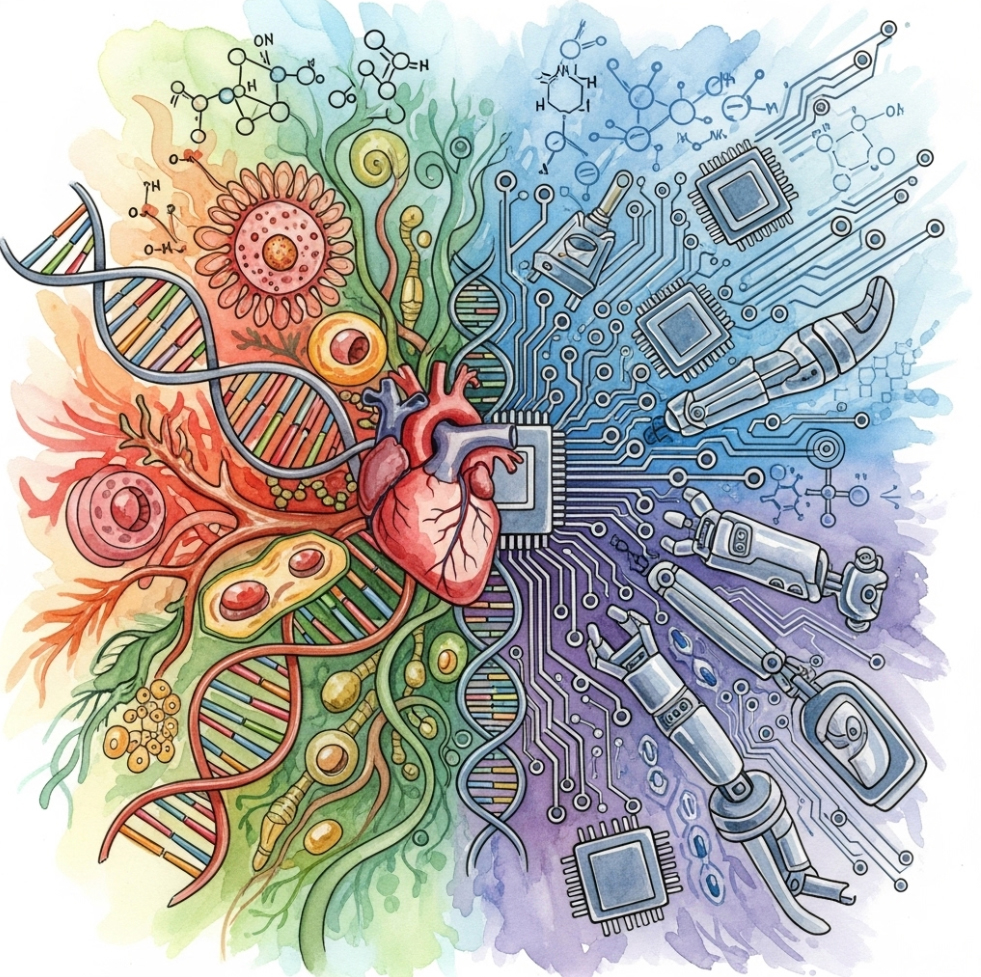
This image illustrates biomedical engineering, showing how medicine and engineering come together to help people. The left side highlights biology with DNA, cells and organs, while the right side features circuits and artificial limbs to represent innovation. At the center, the human heart joins both worlds, symbolizing how this field blends science and technology to improve lives.
Second place: The Immune Response Galaxy by Mahmood Zabihi
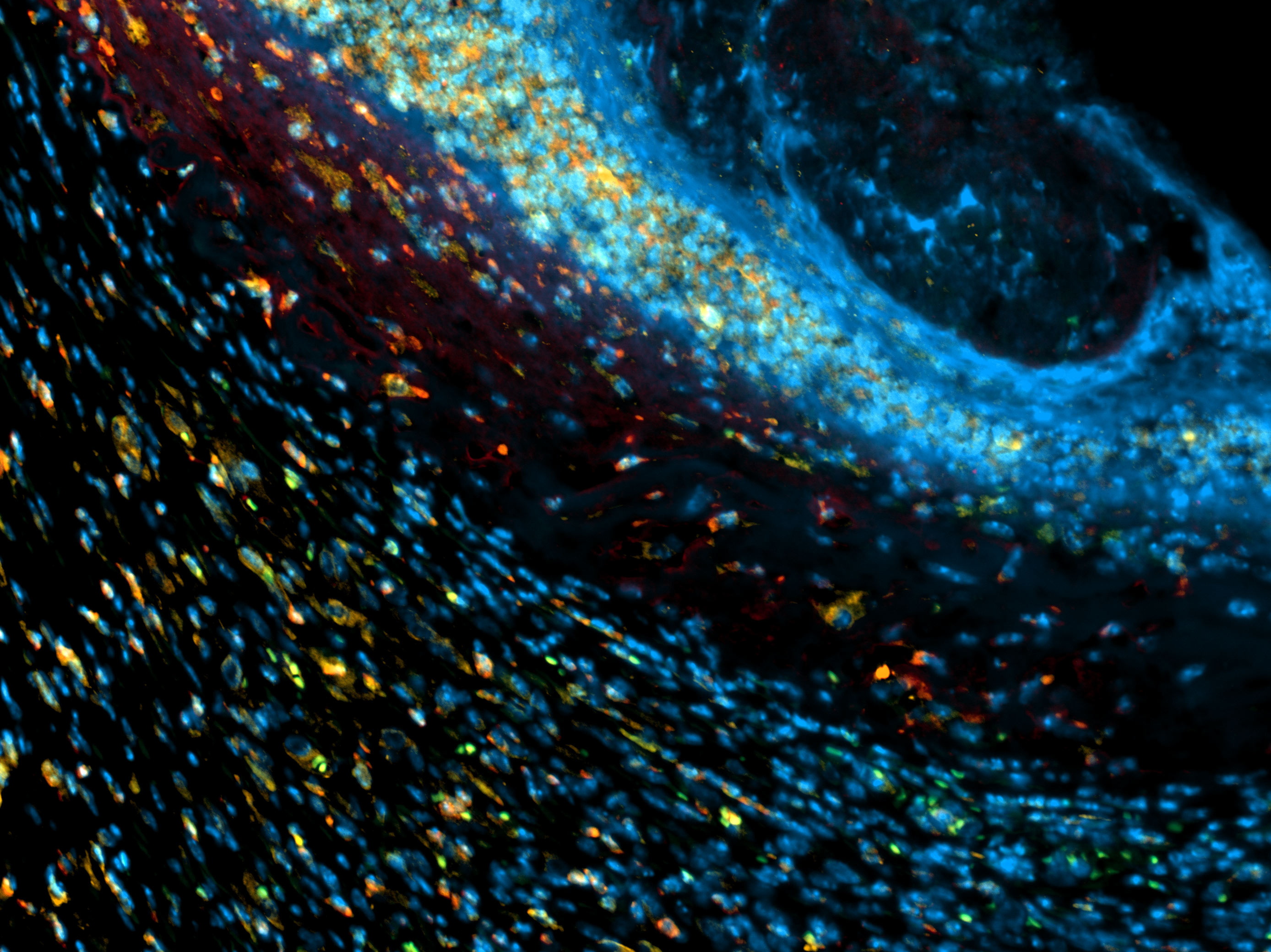
This microscope image illustrates the macrophage "STARS" shining brightly and orbiting through the "GALAXY" of the immune response to a hydrogel implant within the "UNIVERSE" of the sentient body of a mouse! It features M1 (green) and M2 (red) macrophages weaving the fabrics of this event as two of the most important players. Although in this portrait they exist in just one of the several galaxies of this vast and beautifully complex universe, their arrangement and glow do not fail to amaze.
Third place: Hysteria by Aaliyah Fisher
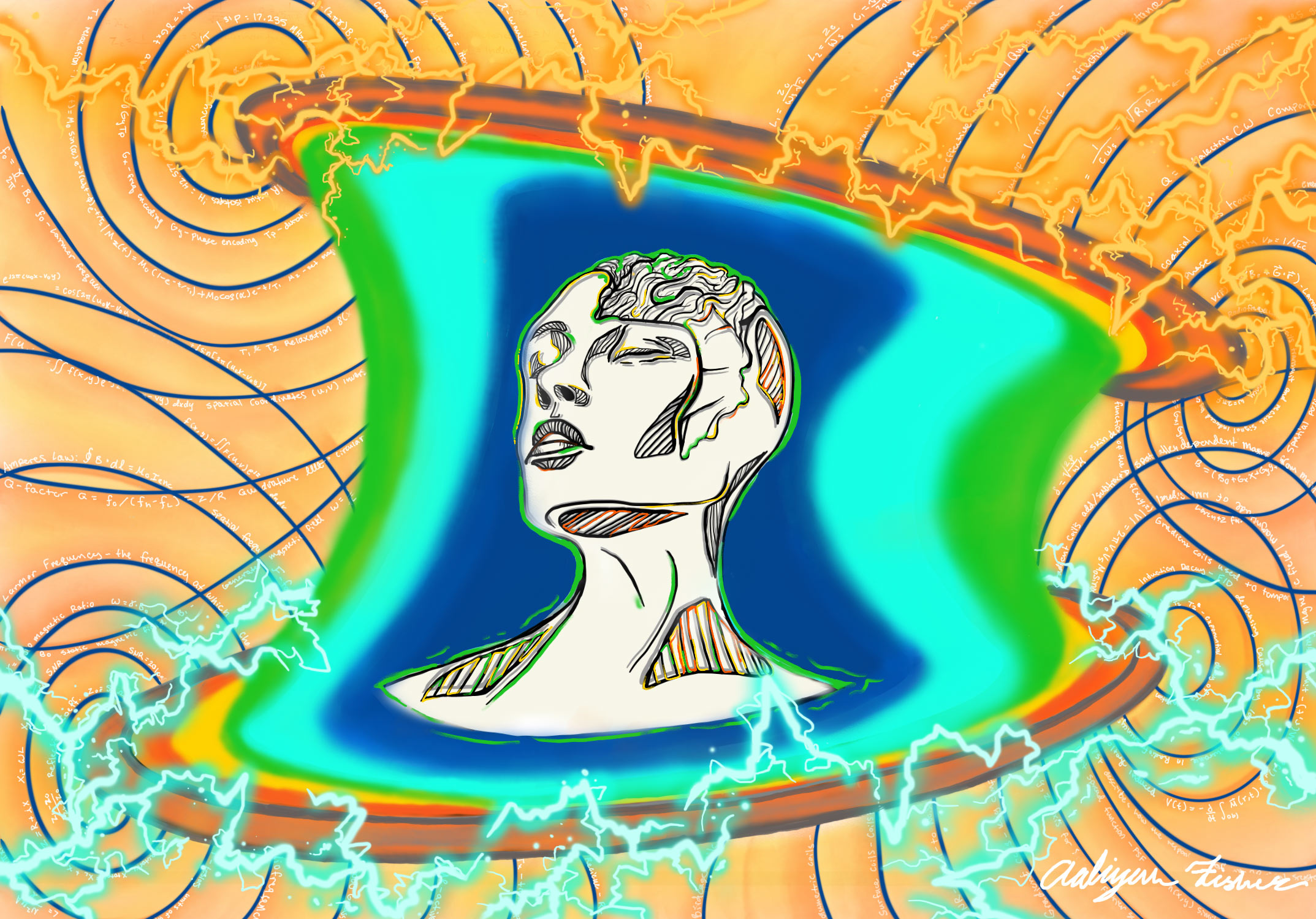
This art piece highlights the frustratingly complicated beauty of Magnetic Resonance Imaging technology. Monitoring and sensing are an intimidating field due to the intricate mathematics and complex theories that are the backbone of this area of study. Although the theories are daunting and the research is extensive, the ability to non-invasively explore the inner workings of the human body has granted healthcare professionals early detection abilities, dramatically improved surgical procedures, and created better outcomes for patient quality of life. In this piece, a homogeneous magnetic field is created by electrical current running through two copper rings above and below the subject in the center. The subject is a computational replica rebuilding itself into the patient that is being imaged. Outside of the rings, an external magnetic field radiates to the edges of the piece, and if you look closely, mathematics related to the Fourier domain and nuclear magnetic resonance are embedded in the background.
Fourth place: Homo sapien: Man to Machine by Lucile Mauvoisin
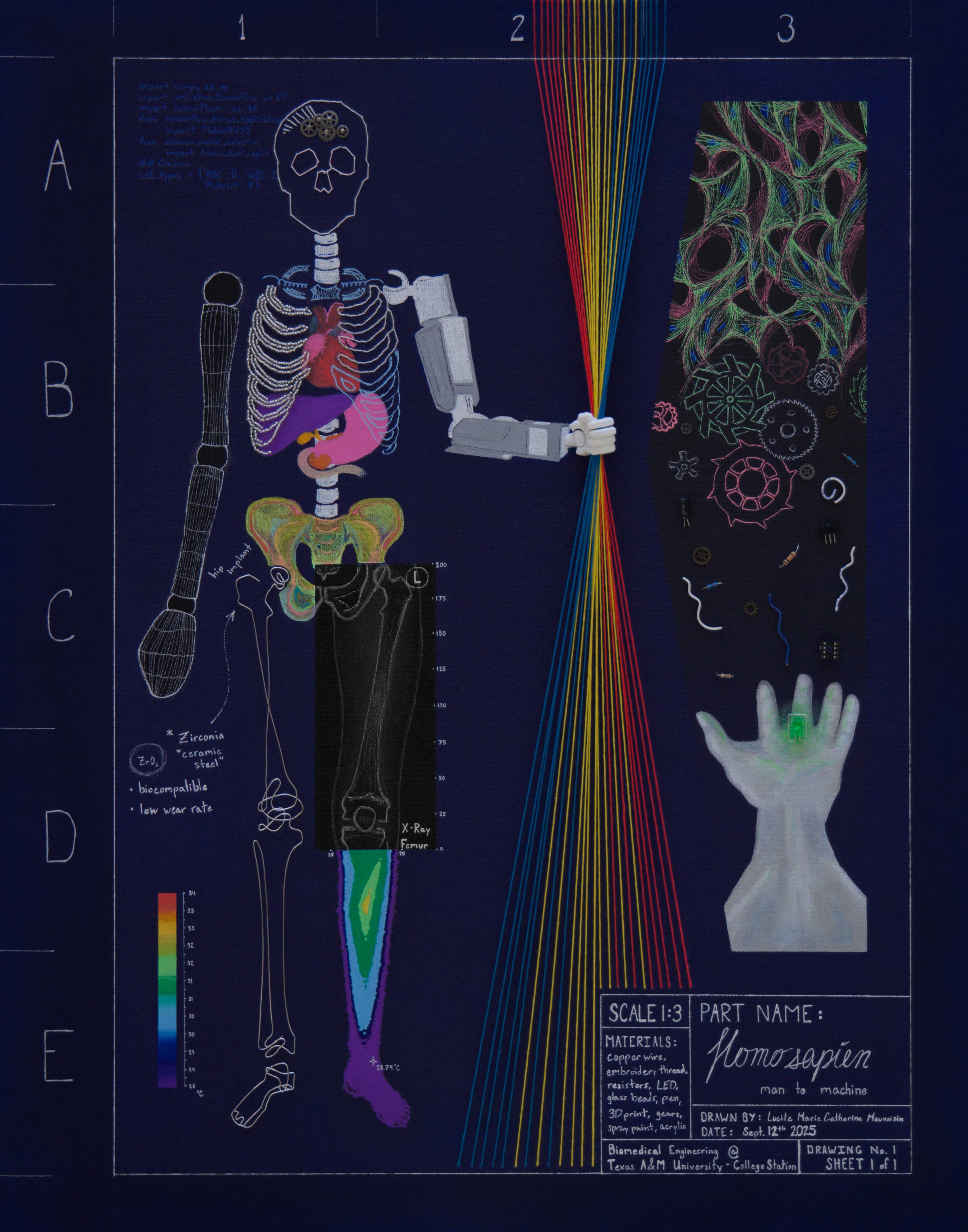
Threads of science and art intertwine in this piece, where layers of paint, ink, wire and fiber echo the many ways we uncover the human form. From the bones revealed by X-rays to the heat traced by thermal scans, from microscopic details to the promise of 3D-printed futures, each medium reflects a different lens of discovery. Together, they capture both the resilient beauty of the body and the creative measures we take to further advance our understanding of it.
Fifth place: Yin-Yang of Skylines Within a Biological Mandala by Archita Sharma
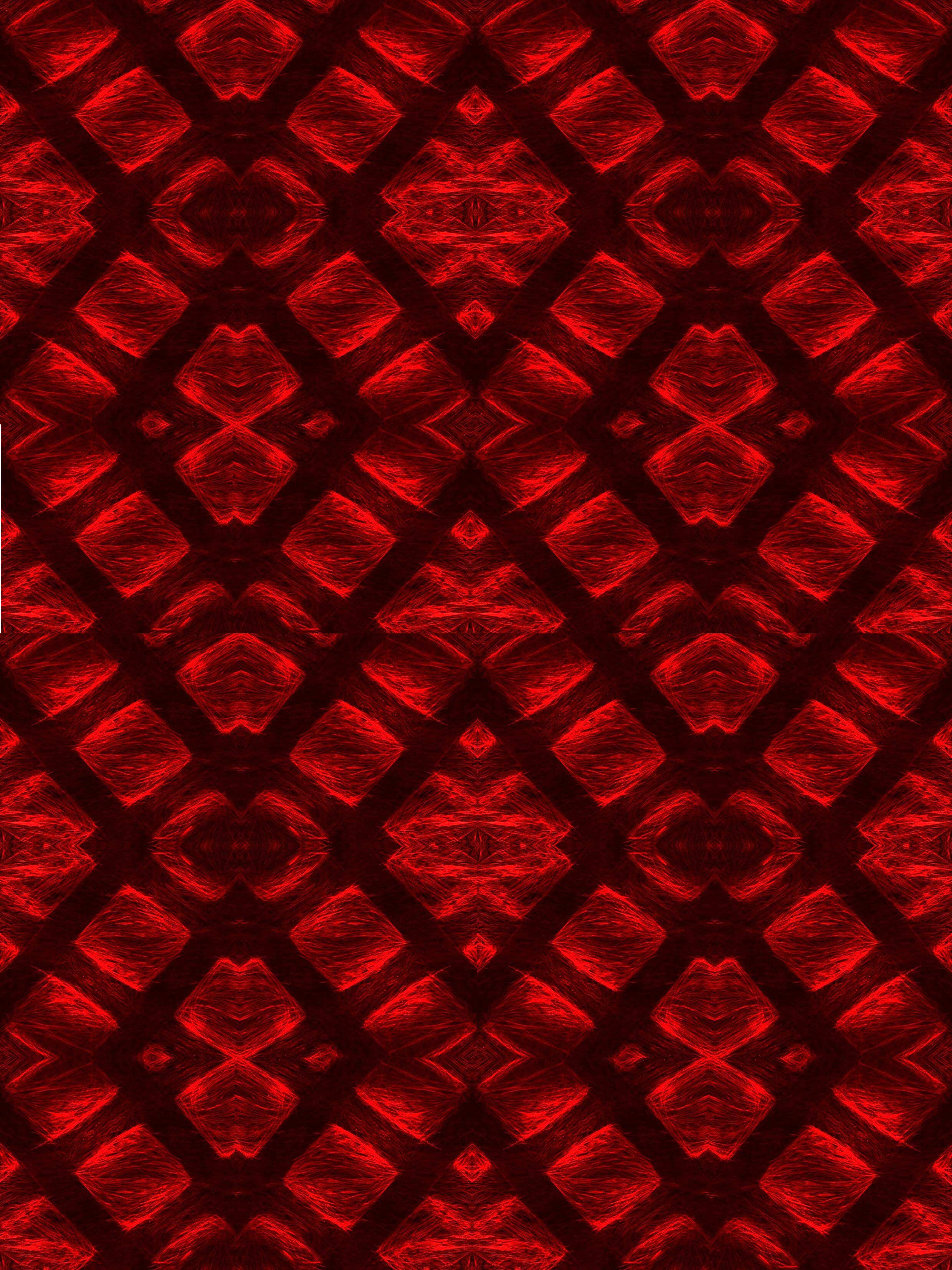
Microscopic actin fibers, boldly stained and mirrored, pop out from cellular architectures, like colorful threads creating a delightful biological mandala. A phenomenon demonstrating nature’s knack for balance, illustrating the yin-yang of biology and engineering. Upon looking through the lens of symmetry, you can see how such fibers shape skylines at the smallest scales. An intricate, minuscule order repeating itself like the end is the beginning, and the beginning is the end, connecting engineering, science, art and design.