
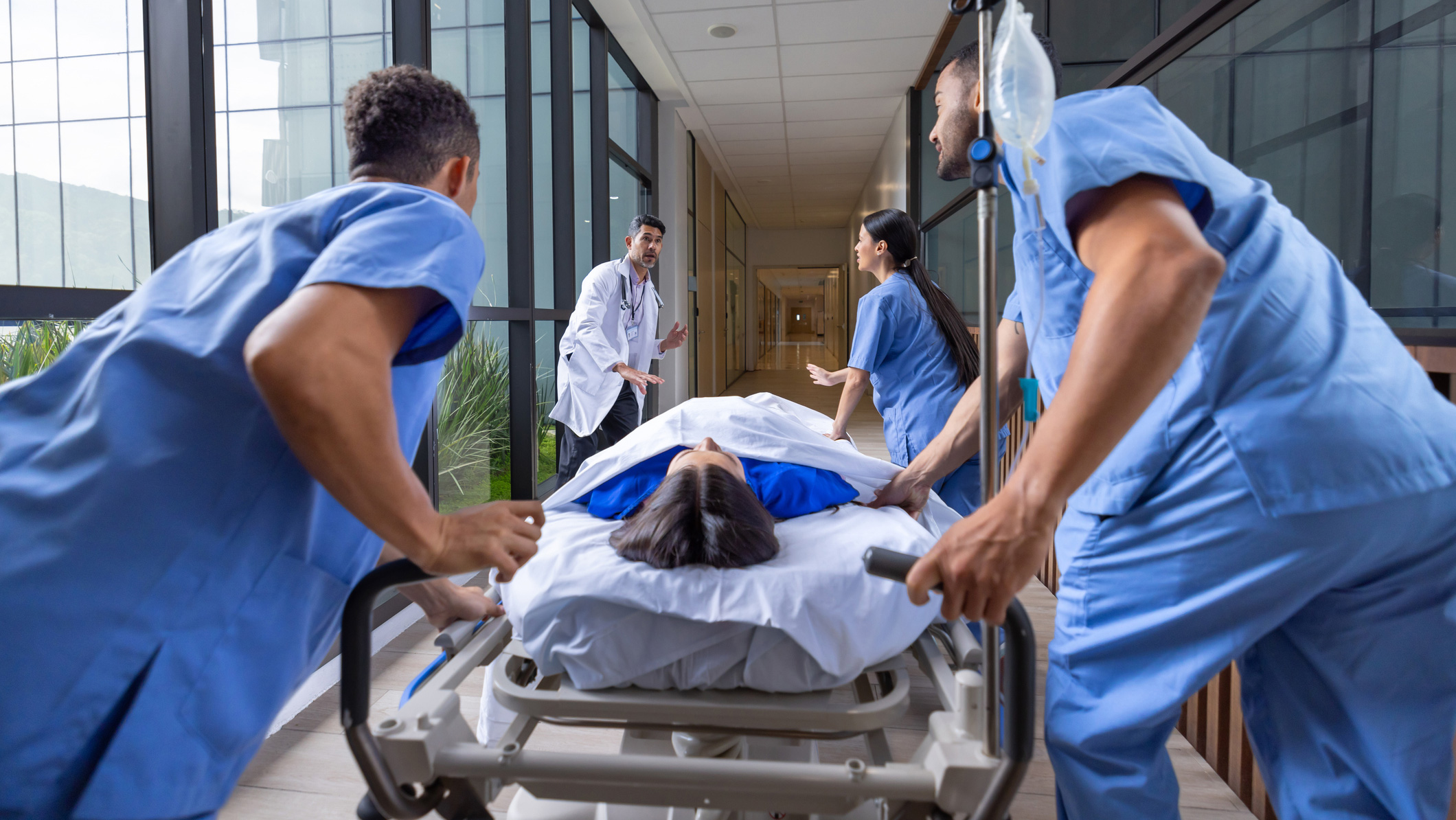
Finding better ways to treat traumatic injuries and blood loss is crucial for saving lives, but it’s also incredibly difficult to research, as few people arriving at the emergency room after an accident would want to discuss participating in clinical research.
But Texas A&M University biomedical researchers are exploring ways to make the impossible possible by developing both life-saving equipment for emergency teams and tools that will make testing new medical devices more efficient.
Their work has the potential to reshape medical care for traumatic injuries — the leading cause of death in people under 45.
“Most people think of heart disease and cancer when they think of the leading causes of death, but trauma is actually the No. 1 cause in young people,” said Dr. Ellie Rahbar, a joint associate professor in the College of Veterinary Medicine & Biomedical Sciences and the College of Engineering.
“It’s not something that only happens to military personnel, especially with the rise in motor vehicle accidents,” she said. “It’s much more common than many people realize.”
A rising tide for trauma research
Figuring out how to better help people on what could be the worst day of their lives has many challenges that Rahbar and her team are working hard to overcome.
“When engineers, physicians or any other research group comes up with an idea, we have to test it, but testing with human patients often isn’t feasible or ethical because the priority is saving their life, not conducting research,” she said. “However, testing is essential for getting through the FDA approval process, so we rely heavily on bench research in laboratories or performing preclinical studies in animals.”
Most people think of heart disease and cancer when they think of the leading causes of death, but trauma is actually the No. 1 cause in young people.
Thanks to a $1.5 million grant from the National Institutes of Health, Rahbar is developing a new computer-based model that may help accelerate the process for testing new medical device prototypes, shortening the amount of time for preclinical assessments until they become available to patients.
“Our goal is to develop a model of the entire cardiovascular system under many different kinds of stress, which will allow us to test how these devices would work in a human patient,” Rahbar said. “If we’re successful, it will be helpful not only to trauma researchers but to anyone wanting to understand acute physiology, like in response to exercise or other short-term exposures.”
One additional challenge is ensuring that the model accounts for variation in human patients.
“No two people respond to traumatic injury in the same way — not even identical twins,” Rahbar said. “We are trying to build that variation into our model.”
Overcoming challenges with creativity
While people are treated for traumatic injuries every day, scientists and physicians haven’t always known exactly how the body responds to complex injuries that involve complications like bleeding, inflammation or tissue damage, which is something that Rahbar and her team hope to change.
“When I was a postdoctoral researcher, I was initially surprised by how little we actually knew about blood transfusions and effective evidence-based treatments for hemorrhagic shock, but it makes sense, because people can die very quickly from their injuries,” Rahbar said.
As an engineer, Rahbar brings a unique perspective to trauma research.
“I’m interested in connecting mechanical changes in the body to biological changes, and vice versa,” she said. “We do this by creating benchtop simulations and computerized models that mimic how blood flows through the heart, so we can see what happens during a sudden drop in pressure or increase in heart rate, as well as how different techniques for stabilizing a patient might work for varying types of injuries. It’s a holistic view of traumatic injury.”